 E-commerce is making inroads towards a broad swathe of
products and the grocery retail industry is no exception. According to
the Kantar Worldpanel Report 2016, sales of groceries through
e-commerce platforms reached $48 billion globally and it is projected
that by 2025, grocery e-commerce will grow to nine percent of the market
and be worth $150 billion worldwide.
E-commerce is making inroads towards a broad swathe of
products and the grocery retail industry is no exception. According to
the Kantar Worldpanel Report 2016, sales of groceries through
e-commerce platforms reached $48 billion globally and it is projected
that by 2025, grocery e-commerce will grow to nine percent of the market
and be worth $150 billion worldwide.
Following suit,
Pakistan’s e-commerce industry, which currently has a value of $30
million and the potential of reaching $600 million by 2017 (source: GSMA study),
has been witnessing an increase in the e-grocery trend. Currently at a
nascent stage and evolving, it is difficult to gauge the size of the
online grocery market in Pakistan; however, considering the $48 billion
global retail market, the growing population and tech trends, one may
say that it could grow to be worth millions.
Groceries
are categorised into packaged or perishable items that include fresh
produce (fruit and vegetables), and there are currently over 20
e-grocery stores (most of them start-ups) operating in Pakistan, among
which the most well-established include Tazamart (an Arpatech Technology
Ventures company), Pakistan Grocery, QuicknEasy or QnE (Premier
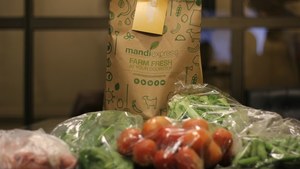
Agencies), Cartpk, Mycart (IBL Group), Gomart, MandiExpress
(Laborforce.pk), GrocerApp and Sabziphal. Tazamart, QnE and GrocerApp
offer both packaged and perishable items while Sabziphal and
MandiExpress deal only in fresh produce.
Aurora interviewed some of the founders of these
e-grocery stores to find out how they are working, what is catalysing
their growth, who their customers are, the segment’s potential – and
most importantly, whether these e-stores will be able to convince
old-school customers to switch their buying habits in future.
“With
the growth of e-commerce and more people moving online to buy stuff,
the shift was natural,” says Ahmed Saeed, Co-Founder, GrocerApp. “For
years, Amazon and Google refrained from groceries, but even they have
jumped into the business.”
Jehanzeb Chaudhri, Founder,
MandiExpress, estimates the size of the e-grocery market at
approximately $170 million, just in Karachi, and growing rapidly. In his
opinion, the segment has huge potential because these start-ups are
providing a level of customer support and user experience that people
have never experienced before in Pakistan. “Customers don’t want to
haggle, they don’t want to be shipped fake products and want a return
policy. E-commerce stores are providing that.”
The
founders believe that what is driving this shift is access to technology
along with more aware audiences open to buying online. The second major
factor is convenience; now that people are fairly accustomed to buying
things like electronic items, personal care products and clothing
online, they want their groceries to be delivered the same way. It saves
time, and one can browse multiple e-grocery stores and compare prices
within minutes. Chaudhri says the biggest hassle in buying fresh produce
is dealing separately with fishmongers, butchers and green grocers and
this is the reason why people opt to order from one source. He believes
people in this segment are curious to see whether they can actually get
the same or better quality produce without having to waste half their
weekend doing so.
Since groceries are primarily a woman’s domain, it is not
surprising that about 70% of the orders come from women. In fact, the
percentage may be even larger, as according to Hassan Malik, Marketing
Associate, QnE, “a lot of women are reluctant to give personal
information to vendors and use masculine identities.”
Almost
all these e-grocery stores conduct business via their websites and have
only recently launched (or are in the process of launching) apps. The
exception is GrocerApp which conduct business only via their app.
According to Saeed, “my experience at PakWheels.com helped. Almost 70 to
80% of PakWheels’ traffic came from mobile phones, so we were clear
that mobile is the future.”
In terms of the business
model, GrocerApp have adopted the marketplace model, whereby customers
can interact with a selected number of sellers, who are registered with
the website or the app. When the website receives an order, it is
forwarded to the relevant seller who then fulfils it by shipping the
merchandise to the customer. All the other e-grocery stores work on the
inventory model, whereby the store manages an inventory, interfaces with
customers, runs logistics and is involved in every aspect of the
business.
Almost all e-grocers deliver without extra
charges for orders over Rs 500 or 1,000. Groceries are delivered, on
average, within four to six hours (Tazamart say they deliver within
three hours). Cash on delivery (COD) is the most utilised mode of
payment, among options that include credit card payments, mobile Point
of Sale (mPOS) and bank transfers. There are also options for different
time slots to have the groceries delivered (especially for families
where both spouses are working and are not available at home 24/7), and
‘express delivery’, whereby the order is delivered within an hour (you
have to pay extra for it).
As for the price of this convenience, Tazamart say the
differential is five to eight percent compared to market rates. Saeed
adds that since 90% of the items have a fixed price from the company,
there is nothing much they can play with. He says the business is unlike
the restaurant business, where people charge more for a burger because
they have spent a lot of money on the outlet’s interior. However, on
comparing prices in the market and ones on these stores’ websites, it
turned out that the differential ranged between 14 and 20%.
Apart
from profit and sales volumes, the real competition among these online
grocery stores is in terms of quality and service (they believe that
even if they gave promotions and discounts without quality service, no
one would be interested in saving Rs 50). This is why their customer
service includes a no-questions-asked return policy. Chaudhri adds that
to attract more customers and retain regular ones, his store is
integrating loyalty points to reward customers and has an ‘insider
group’ of customers to whom they send out samples of new products and
gifts of any remainder inventory procured from the farms. “This gives us
feedback, keeps our customers happy and brings in more sales.”
Since
these e-stores are more inclined towards catering to online customers,
about 80% of their focus is on digital marketing, that includes social
media marketing and Google Display Network, in combination with search
engine marketing (SEM), and sending SMS and newsletters to the people
listed on their database on a regular basis.
Despite
the fact that these e-grocery stores are working assiduously towards
luring customers via convenience and service, it is a given that people
will not stop visiting the traditional grocery stores or hypermarkets,
as for most Pakistanis, grocery shopping is an enjoyable experience,
where they want to touch, smell and pick their own produce. So although
online grocery stores are a great value addition, a combination of
bricks and clicks is what consumers want. In this respect, Sabziphal is a
definite winner because they run a brick and mortar store as well as an
e-grocery store. Saeed for his part is of the opinion that super or
hypermarkets are not competitors; rather, they could be potential
partners to increase the efficiency of online stores.
All
founders agree that the biggest challenge is the conversion from buying
groceries from physical shelves to an app or a website. Furthermore, an
efficient logistics system is essential in ensuring timely delivery of
orders. “Also, we are dealing with a very large informal market that
comprises people who are largely uneducated,” adds Chaudhri. This is
why, he says, the vegetable, fruit, meat and seafood wholesale markets
are unregulated and chaotic. “We want to upgrade this current system by
bringing tech into the equation.”
Finally, for any
start-up to succeed, a public-private partnership is essential. These
entrepreneurs voice concerns over the Government’s silence towards the
e-commerce industry and its future. This indifference is limiting the
potential of this business. “If someone starts a manufacturing industry
or a mill, they will be allotted incentives by the Government, like tax
exemption or free land, but for tech start-ups, there are none so far,”
says Malik.


